




★ Key Takeaways
- ✓Forecasts call for above-normal wildfire activity across California and much of the West through fall 2026 -- this is a plan-ahead season, not a wait-and-see one.
- ✓Once an evacuation order or warning drops, carriers generally cannot enter the zone -- road closures and safety restrictions mean the window to ship a vehicle out closes fast.
- ✓You can drive one vehicle out of an evacuation. The second car, the classic in the garage, the RV, and the boat are the ones that get left behind -- those are the ones to ship early.
- ✓Comprehensive auto insurance typically covers fire damage, but a totaled classic or RV pays out far less than moving it would have cost -- and no payout replaces an irreplaceable car.
- ✓Booking transport out of a high-risk area in a calm week costs the same as any normal shipment; booking during a regional fire scramble means competing with everyone else for the same trucks.
We've been arranging vehicle transport since 1999, and every fire season the same calls come in -- usually a few days too late. Someone's watching a fire map, the wind shifted overnight, and now they want the classic out of the garage in the foothills or the RV off the property by the weekend. Sometimes we can make it happen. But once an evacuation warning turns into an order, the honest answer is that nobody's truck is getting up that road, ours or anyone else's. So with fire agencies calling for above-normal activity across California and much of the West again this season, let's talk about the version of this that actually works: moving vehicles out before they're in the path of anything.
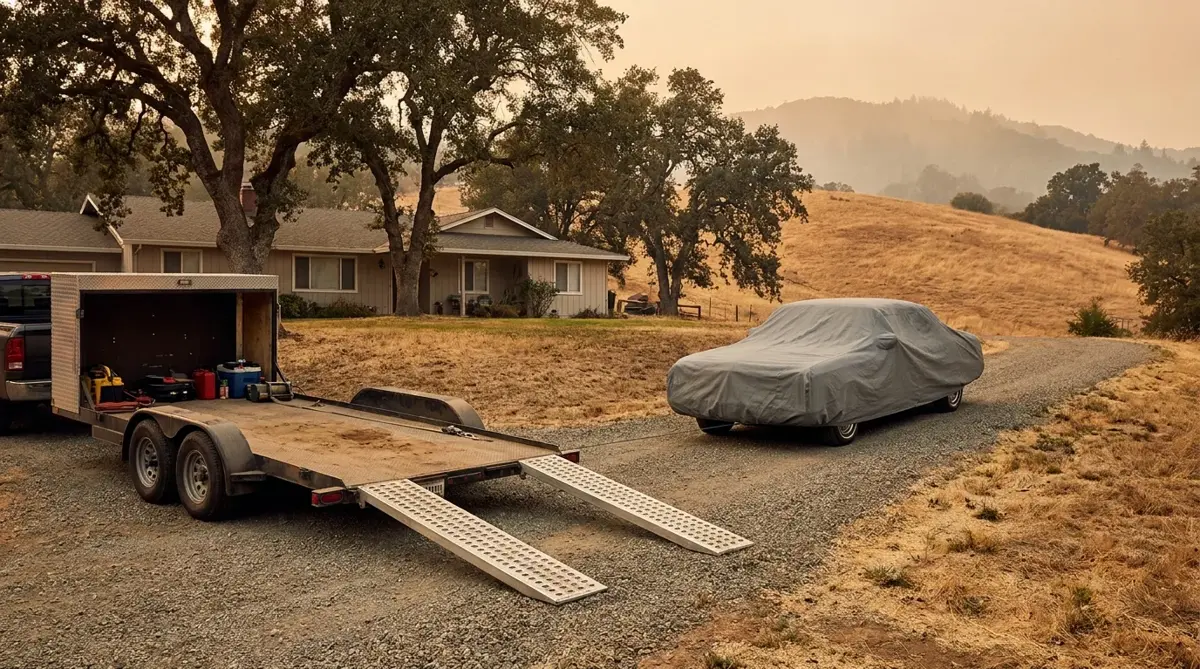
Here's the math that catches people. Most households in fire country have more vehicles than drivers. When an evacuation comes, you take the daily driver -- maybe two cars if there are two of you and you caravan. The third vehicle stays. The '68 Mustang under the cover stays. The travel trailer stays. The boat on its trailer stays. Fire officials will tell you the same thing we will: an evacuation is not a moving day. You get yourself, your people, and one vehicle out. Everything else needed a plan that started earlier.
The window closes faster than people expect, and it closes in stages. First comes the red-flag warning, when conditions turn dangerous but nothing's burning near you -- transport is still routine. Then a fire starts in the region and suddenly every carrier's phone in three counties is ringing at once. Then comes the evacuation warning, and roads start restricting. By the time an order drops, law enforcement is turning trucks around at the roadblock, and no legitimate carrier will send a driver past one. What was a normal $500 shipment two weeks ago is now impossible at any price.
“You can only drive one car out of an evacuation. Every other vehicle you own is counting on the plan you made before the smoke showed up.”
So the move is simple: if a vehicle you care about spends the summer at a property in a high-risk area, ship it somewhere safer on your schedule, not the fire's. That might mean sending the classic to a family member's place a few hours away, moving the RV to covered storage outside the fire zone, or repositioning a second car to the city apartment where it's useful anyway. A regional move of a few hundred miles on open transport typically runs a few hundred dollars; enclosed transport for a collector car costs more and is worth it for anything irreplaceable. Compare that to what the vehicle is worth -- financially or otherwise -- and it's one of the cheaper insurance policies you'll ever buy.
Ready to ship? Get a real price in 60 seconds.
Our AI marketplace pulls live bids from verified carriers running your route this week — no obligation, no spam.
Get My Free Quote →And about insurance: yes, if you carry comprehensive coverage, fire damage is typically covered. But talk to anyone who's been through it and they'll tell you the payout is the consolation prize, not the win. The check for a burned classic reflects a valuation formula; it doesn't rebuild thirty years of ownership. RVs and boats routinely come in underinsured for what replacing them actually costs. And every claim starts with the vehicle being gone. The whole point of moving early is that you never have to find out how the claim would have gone.
If you do decide to move a vehicle out, the process is the same straightforward transport we run every day. You post the shipment, vetted carriers bid on it, you pick your carrier and a pickup window that works. The vehicle gets a condition report and a bill of lading at pickup, rides to wherever you've decided is safe, and you inspect it at delivery. For a stored vehicle, have the battery charged and the tires holding air -- a running vehicle loads in minutes, and even a non-runner can go with a winch-equipped carrier if you let us know ahead of time.
One more thing worth saying: this isn't just a California conversation. The same above-normal outlook covers big stretches of the interior West, and we move vehicles ahead of hurricane season on the Gulf Coast and ahead of hard winters in the Mountain West for exactly the same reason. Wherever you keep vehicles you couldn't drive out in one trip, the season for thinking about it is before the season.
American Auto Shipping is an AI-powered marketplace, not a broker and not a carrier -- vetted carriers compete for your shipment, which means real market pricing and real availability, booked on your timeline. If you've got a vehicle sitting somewhere the fire maps keep circling, get a free quote on our platform or call us at (800) 930-7417, and let's get it somewhere boring before the interesting weather starts.
About the Author
Dave Armstrong is one of American Auto Shipping's longest-tenured team members. As content manager and strategist, most of what you read on this website came from him. He has extensive knowledge of the auto transport industry, having spent time in every role the business has to offer.