




★ Key Takeaways
- ✓Every legitimate carrier must have active FMCSA operating authority -- check SAFER (safer.fmcsa.dot.gov) by USDOT or MC number before booking.
- ✓Federal insurance minimums: $750,000 BIPD and $5,000/$10,000 cargo -- but many carriers carry more. Always request a certificate of insurance.
- ✓Our new Carrier Directory at /marketplace/carriers/ automatically verifies authority, insurance, and safety ratings for 500+ carriers via live FMCSA data.
- ✓Red flags: no USDOT number, quotes 40%+ below market, demand full payment upfront, no physical address -- walk away from any of these.
- ✓Always get a binding quote in writing, photograph your vehicle before pickup, and review the Bill of Lading carefully at both ends.
We've been in this industry since 1999 and we've seen it all -- legitimate carriers with 20 years of clean records, fly-by-night operations that disappear after one bad haul, and everything in between. The single most important thing you can do before booking auto transport is verify that the company handling your vehicle is actually authorized and insured to do so. It sounds obvious, but you'd be shocked how many people skip this step and end up with a nightmare on their hands.
The Federal Motor Carrier Safety Administration maintains a public database called SAFER -- Safety and Fitness Electronic Records -- that anyone can access for free at safer.fmcsa.dot.gov. Every legitimate auto transport carrier and broker in the United States is registered here with a USDOT number and, if they have operating authority, an MC number. When you search a company, you can see their authority status, insurance on file, safety rating, fleet size, and whether they have any out-of-service orders. If a company can't provide you a USDOT number or their record shows inactive authority, that's your cue to walk away.
| What to Verify | Where to Check | What You Want to See |
|---|---|---|
| Operating Authority | FMCSA SAFER System | Status: ACTIVE, Allowed to Operate: YES |
| BIPD Insurance | FMCSA SAFER L&I | On file, minimum $750,000 |
| Cargo Insurance | FMCSA SAFER L&I | On file, $5,000/vehicle minimum |
| Safety Rating | FMCSA SAFER | Satisfactory (or Not Rated -- 80% of carriers) |
| Broker Bond | FMCSA SAFER (brokers) | $75,000 surety bond on file |
| Out of Service | FMCSA SAFER | No OOS orders or flags |
Insurance is where things get critical. Federal law requires carriers to maintain a minimum of $750,000 in BIPD (Bodily Injury and Property Damage) insurance and $5,000 per vehicle / $10,000 per occurrence in cargo insurance. Brokers must carry a $75,000 surety bond. But here's the thing most people don't realize -- having insurance "on file" with the FMCSA doesn't mean it's currently active. Insurance companies file Form BMC-91 or BMC-34 with the FMCSA, and there can be a lag of 30 to 60 days between a policy lapse and the FMCSA record updating. That's why we always recommend requesting a current certificate of insurance directly from the carrier before booking. A legitimate carrier will have no problem providing this.
“If a carrier can't give you a USDOT number in the first 30 seconds of conversation, that tells you everything you need to know.”
This is exactly why we built our Carrier Directory at americanautoshipping.com/marketplace/carriers/. We wanted to take the guesswork out of carrier verification. The directory pulls live data from the FMCSA for every carrier listed -- authority status, insurance on file, safety rating, fleet size, driver count, and more. Each carrier profile shows exactly what we verified and when. It's the same data you'd get from SAFER, but organized in a way that actually makes sense, with context about what the numbers mean.
Ready to ship? Get a real price in 60 seconds.
Our AI marketplace pulls live bids from verified carriers running your route this week — no obligation, no spam.
Get My Free Quote →Let's talk about red flags. In 27 years we've developed a pretty reliable gut check for spotting problematic operators. First, if a quote comes in 40% or more below every other quote you've received, something is wrong. Either they're going to raise the price after you commit (the classic bait-and-switch) or they're cutting corners on insurance and equipment. Second, any company that demands full payment upfront before pickup is a major red flag. Standard industry practice is a deposit with the balance due at delivery. Third, if they have no verifiable physical address and their "office" is just a cell phone, proceed with extreme caution.
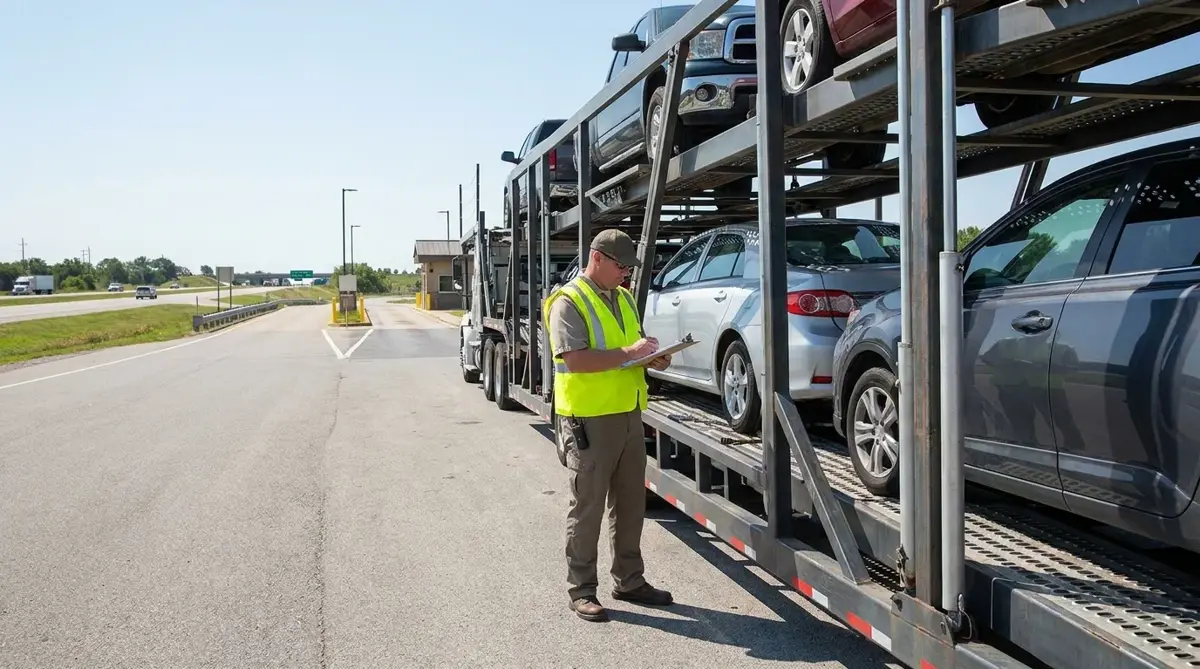
The Bill of Lading is your legal protection, and most customers treat it like an afterthought. This document records the condition of your vehicle at pickup and delivery. Before the carrier loads your car, walk around it with the driver and note every scratch, dent, and blemish. Take timestamped photos of all four sides, the top, the interior, and the odometer. At delivery, do the exact same thing and compare. If there's new damage, note it on the BOL before signing. Once you sign a clean BOL at delivery, filing a damage claim becomes exponentially harder.
Safety ratings deserve a quick explanation because they confuse a lot of people. The FMCSA issues three ratings: Satisfactory, Conditional, and Unsatisfactory. Here's what most people don't know -- about 80% of carriers have NO safety rating at all. That doesn't mean they're unsafe. It means they haven't been audited yet. A carrier with no rating but active authority and insurance on file is perfectly legitimate. A carrier with an Unsatisfactory rating, on the other hand, should be avoided -- that's an active safety concern flagged by federal regulators.
One more thing worth mentioning: the difference between a carrier and a broker matters when you're verifying credentials. A carrier owns trucks and physically transports vehicles. A broker arranges transport but doesn't own trucks -- they connect you with carriers. Both must be FMCSA-registered, but they have different authority types. We're neither -- American Auto Shipping is a marketplace that connects you directly with verified carriers through our AI-powered platform. Think of us like a matchmaking service for auto transport. Every carrier in our network is FMCSA-verified before they can participate.
Our carrier directory currently lists over 500 auto transport companies with real FMCSA data -- and it's growing every day as our automated enrichment system processes more carriers. You can filter by state, entity type, safety rating, fleet size, and insurance status. Every profile page includes the carrier's full verification details, a link to verify directly on the FMCSA SAFER system, and educational content about what to look for. It's the most comprehensive independent carrier directory in the auto transport industry, and it's free to use.
The bottom line is simple: 30 minutes of research before booking can save you from a nightmare that takes weeks to resolve. Check the SAFER system. Request a certificate of insurance. Get a binding quote in writing. Document your vehicle before and after. And if you want the verification done for you, browse our carrier directory or call us at (800) 930-7417. We've been doing this since 1999 and we've built every tool on our platform specifically to make this process safer and more transparent for you.
About the Author
Dave Armstrong is one of American Auto Shipping's longest-tenured team members. As content manager and strategist, most of what you read on this website came from him. He has extensive knowledge of the auto transport industry, having spent time in every role the business has to offer.