




★ Key Takeaways
- ✓For CONUS-to-CONUS PCS moves the military doesn't ship your POV; you arrange and pay for transport and claim reimbursement under the Personally Procured Move (DITY) allowance, so keep every receipt.
- ✓For OCONUS moves the military ships one POV through the Vehicle Processing Center, but getting your vehicle to the VPC (Jacksonville, San Diego, Tacoma, Baltimore) is on you.
- ✓Book the moment you have orders in hand — peak PCS season runs roughly May–August and base-to-base corridors get tight.
- ✓A Fort Liberty to Fort Cavazos move (about 1,300 miles) runs $900–$1,100 off-peak but $1,100–$1,350 in PCS season; booking 3–4 weeks ahead lands the lower end.
- ✓You don't have to be present — a designated person with valid ID can sign the Bill of Lading at either end.
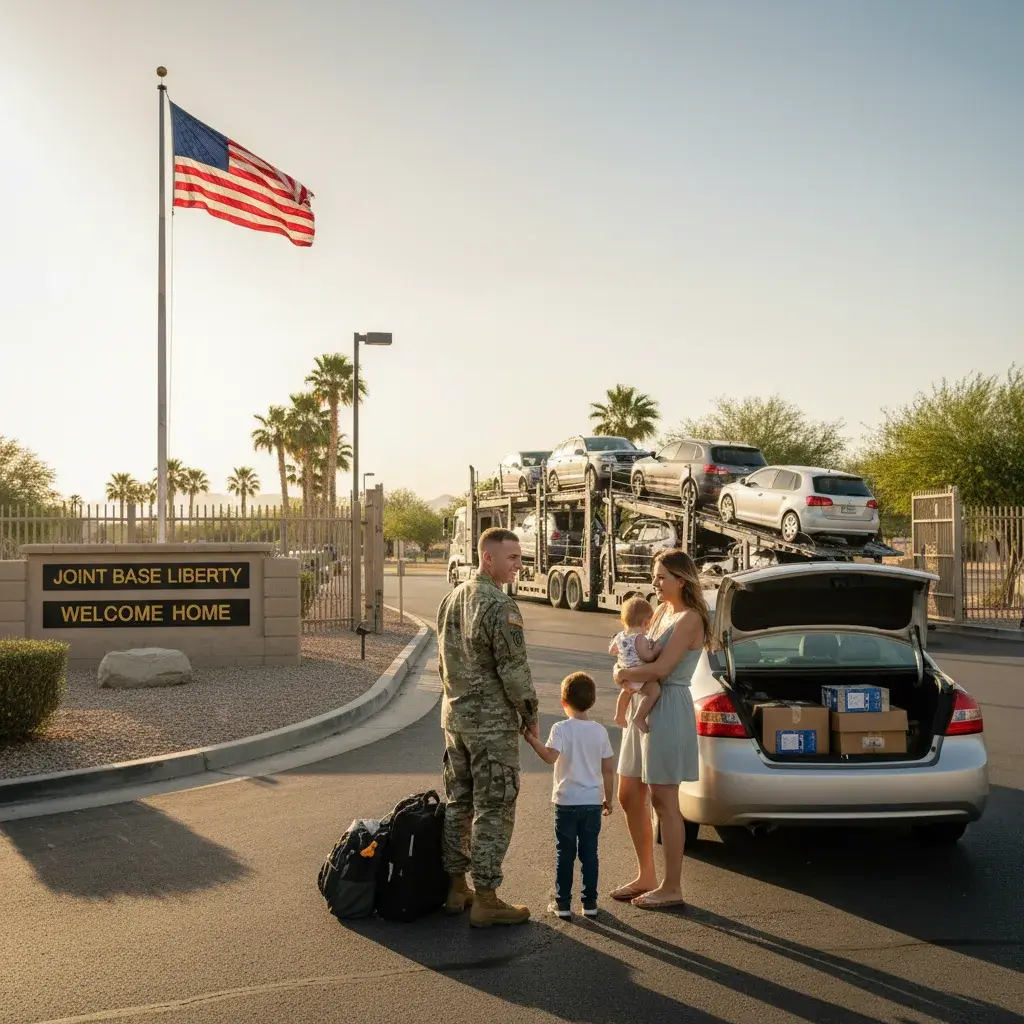
PCS season hits like clockwork every spring and summer, and after 25+ years of shipping vehicles for military families, I’ve learned a few things the hard way that I want to share. If you’re an active duty service member — or a military spouse handling the logistics while your partner is already at the gaining installation — this one’s for you. I’ve shipped vehicles to and from just about every major military installation in the country, and the process doesn’t have to be the headache it often becomes. But you need to understand how the system works and where the pitfalls are.
First, let’s talk about what the military will and won’t cover. For a CONUS-to-CONUS PCS move, the military does not ship your privately owned vehicle for you. That’s a common misconception. What they do provide is a Personally Procured Move allowance — what used to be called a DITY move. You arrange and pay for your own vehicle transport, and you can claim reimbursement for the cost. The reimbursement is based on what it would have cost the government to move your authorized weight, and your POV shipment can be part of that calculation. Keep every receipt, every quote confirmation, every delivery document. The finance office will want documentation, and having it organized saves you weeks of back-and-forth.
For OCONUS moves — shipping stateside to Hawaii, Alaska, or overseas — the military will ship one POV through the Vehicle Processing Center system. But here’s what they don’t handle: getting your vehicle TO the VPC. If you’re stationed at Fort Campbell and you need to get your car to the VPC in Jacksonville for an overseas shipment, that’s on you. And that’s exactly the kind of shipment we handle constantly. We’ve shipped thousands of vehicles to VPCs in Jacksonville, San Diego, Tacoma, and Baltimore for service members heading overseas.
“Early booking saves money and stress — the math is simple.”
Timing is everything with a PCS move, and this is where I see people get into trouble. You get your orders, you’ve got a report date, and suddenly you’re trying to coordinate a household goods move, clear housing, outprocess, and figure out your vehicle situation all at once. Here’s my strong recommendation: book your vehicle transport the moment you have orders in hand. Don’t wait until two weeks before your report date. During peak PCS season — which runs roughly May through August — carrier availability on military-heavy routes gets tight. Think about it: Fort Bragg to Fort Hood, Fort Campbell to Joint Base Lewis-McChord, Camp Pendleton to Camp Lejeune. These base-to-base corridors are flooded with military moves all summer.
Ready to ship? Get a real price in 60 seconds.
Our AI marketplace pulls live bids from verified carriers running your route this week — no obligation, no spam.
Get My Free Quote →Let me give you some real numbers. A vehicle shipment from Fort Liberty in North Carolina to Fort Cavazos in Texas — about 1,300 miles — typically runs $900–$1,100 during non-peak months. During PCS season, that same route can push $1,100–$1,350 due to demand. If you book 3–4 weeks ahead, you’ll generally land on the lower end. If you wait until one week out, you’re paying rush pricing and you might still wait 7–10 days for pickup because every carrier on that route is already booked. The math is simple: early booking saves money and stress.
Here’s something else military families often don’t realize: you don’t have to be present for pickup or delivery. I know that sounds obvious, but when you’re already at your new duty station and your spouse is handling the move at the losing installation, or vice versa, you can designate someone to release or receive the vehicle. A neighbor, a friend, your sponsor at the new base — anyone with a valid ID who can sign the Bill of Lading. We coordinate this all the time. Just let us know the situation and we’ll work with whoever is available at both ends.
Military discounts are real but they vary wildly across the industry. Some companies offer 5% off, some offer $50 flat, some say “military discount” but just quote you the regular price. At American Auto Shipping, we offer genuine military pricing through our marketplace — and more importantly, because carriers on our platform bid competitively on loads, military families often get better rates than what a flat discount would provide anyway. The marketplace model means you’re getting actual market pricing from carriers who want the business, not an inflated rate with a cosmetic discount slapped on top.
One thing I always tell military customers: document your vehicle’s condition thoroughly before shipping. Take timestamped photos of every panel, every scratch, every ding. Walk around the entire vehicle with your phone camera. Why? Because if there’s any damage during transport, you need clear before-and-after evidence to file a claim — whether that’s through the carrier’s insurance or your own USAA/military insurance. And on the flip side, carriers love picking up from customers who have already documented their vehicle’s condition, because it protects them from fraudulent claims too. It makes the whole process cleaner for everyone.
For families with two vehicles — which is most military families I work with — think about whether it makes sense to ship both or drive one. If you’re doing a cross-country PCS, driving one vehicle gives you personal transport during the transition, and shipping the second eliminates the nightmare of trying to coordinate two drivers, a tow dolly, or leaving a car behind. We see a lot of families ship the second vehicle and drive the primary one with the family. It’s usually the most practical and cost-effective approach.
Bottom line: if you’ve got PCS orders and a vehicle to move, start the process now. Get on our platform, put in your pickup and delivery locations, and see what carriers are quoting. Lock in your booking as soon as you know your timeline. And if your situation is complicated — maybe you’re shipping to a VPC, or your report date got moved, or you need temporary storage — call our concierge team. We’ve been handling military moves since the early 2000s, through every BRAC realignment, every deployment cycle, every PCS season. We know how this works and we’ll make sure your vehicle gets to your next duty station without adding stress to an already chaotic process. Thank you for your service — seriously — and let us take this one thing off your plate.
About the Author
Dave Armstrong is one of American Auto Shipping's longest-tenured team members. As content manager and strategist, most of what you read on this website came from him. He has extensive knowledge of the auto transport industry, having spent time in every role the business has to offer.
Learn More About Auto Shipping
Shipping To or From These Areas?
Auto transport by city