





The short answer
To ship a car, get a free estimate with your vehicle, pickup and delivery ZIP codes and dates; compare offers from licensed auto transport companies and book one; check its USDOT number and insurance; prepare the car and photograph it; then inspect it with the driver at pickup and again at delivery on the Bill of Lading. Most cars ship door to door on an open carrier. A cross-country trip takes about 6–10 days on the road, plus a pickup window of a few days. The estimate ranges on this page come from American Auto Shipping's published formula.
Compare offers from licensed auto transport companies. Free, no obligation.
Get your free estimate →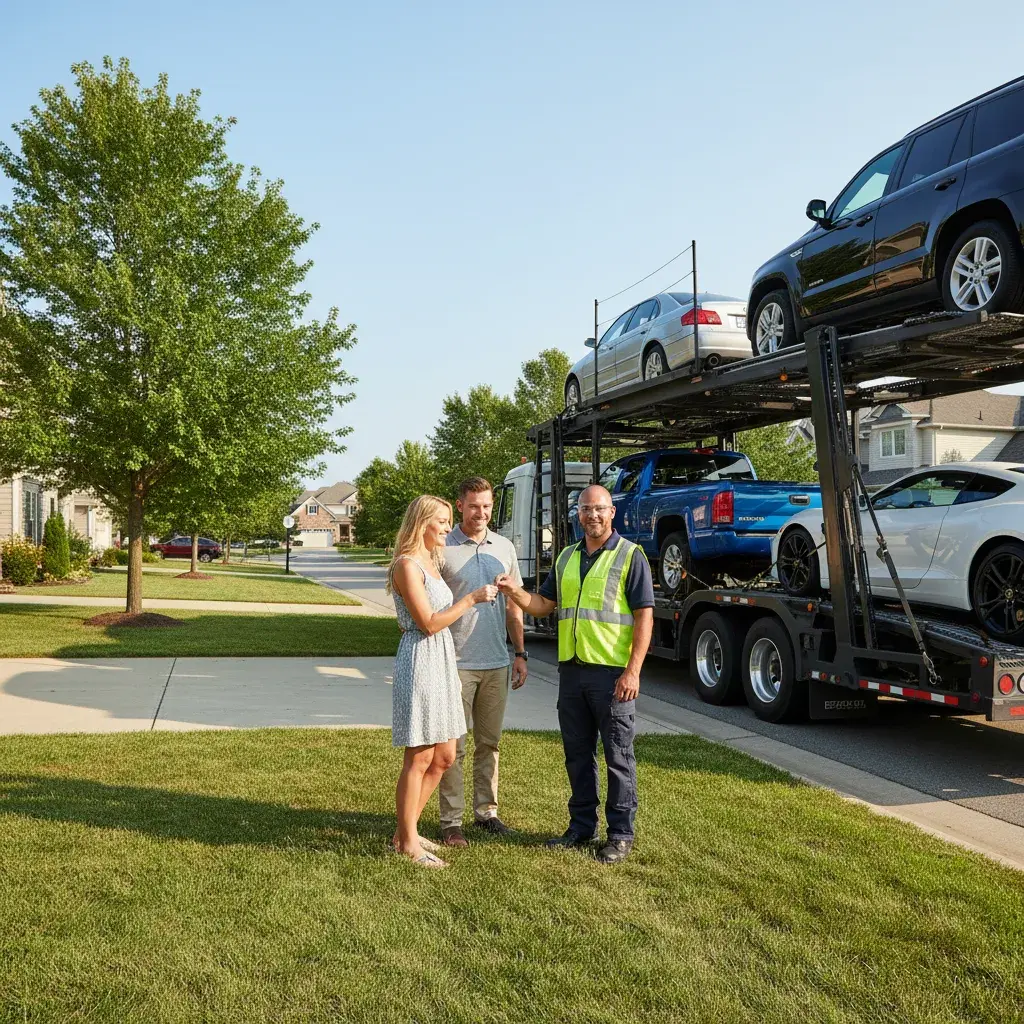
In This Guide
- 1.How do you ship a car, step by step?
- 2.How do you get a car shipping quote?
- 3.What is the difference between a broker and a carrier?
- 4.Should you ship a car on an open or enclosed carrier?
- 5.How soon can a car be picked up?
- 6.What happens at pickup?
- 7.How long does it take to ship a car?
- 8.How much does it cost to ship a car?
- 9.When is the cheapest time to ship a car?
- 10.How do you pay for car shipping?
- 11.How do you check the car at delivery?
- 12.How does American Auto Shipping work?
How do you ship a car, step by step?
Shipping a car takes eight steps, from asking for a free estimate to paying the company you booked. We've been doing this at American Auto Shipping since 1999 and we've helped customers ship over 235,000 vehicles. The fundamentals haven't changed much, but the transparency has improved a lot. No jargon, no sales pitch -- the sections below take each step in turn.
- Request a free estimate with your vehicle, both ZIP codes and your dates.
- Choose open or enclosed transport.
- Compare the offers, check the company's USDOT number and insurance, and book one licensed company directly.
- Agree a pickup window of a few days.
- Photograph the car, then walk around it with the driver and sign the Bill of Lading at pickup.
- Let the company haul it; drivers cover roughly 350 to 500 miles a day.
- Inspect the car at delivery, note any new damage on the Bill of Lading, then sign.
- Pay the company you booked, on the terms in its written price.
How do you get a car shipping quote?
To get a car shipping quote, give your vehicle's year, make and model, your pickup and delivery ZIP codes, open or enclosed transport, and your approximate dates. The estimate weighs distance, vehicle size, route demand, season and current carrier availability.
This is where a lot of people make their first mistake: they request quotes from ten companies and pick the cheapest. In auto transport the cheapest quote is frequently not the best deal. Some companies quote low to win the booking, then call back a week later saying the carrier needs more money to pick up the car. The estimate ranges on our pages come from a published formula; the binding price comes in writing from the licensed company you choose.
What is the difference between a broker and a carrier?
A carrier is the company that owns the truck and hauls your vehicle. A broker coordinates the shipment by connecting you with a carrier from a network of vetted transport companies. With American Auto Shipping, licensed companies compete for your shipment with their best offers and you choose.
Most auto shipments in the U.S. go through brokers, and there's a good reason for that. A broker has access to thousands of carriers across every route, so it can find competitive pricing and faster pickup times. A single carrier only runs specific routes and may not have space when you need it. Whoever you book with, check for an active FMCSA license (MC number), a physical business address and real customer reviews.
Should you ship a car on an open or enclosed carrier?
Open transport means your car rides on a multi-level car hauler, exposed to weather and road dust. It's the standard, lowest-cost choice and what most everyday vehicles ship on. Enclosed transport means a fully enclosed trailer that protects the car from weather, road debris and prying eyes. It costs about 50% more than open (our estimate formula prices it at 1.5 times open) and is recommended for vehicles valued over $75,000, classic cars, exotics and show cars.
Open haulers are what you see on every highway, and the exposure is the same your car gets on any dealership lot. Flatbed transport is also available for oversized vehicles, lifted trucks and heavy equipment.
| Transport type | What it is | Best for | Cost versus open |
|---|---|---|---|
| Open | Multi-level car hauler, car exposed to weather | Everyday vehicles | Baseline |
| Enclosed | Fully enclosed trailer | Vehicles over $75,000, classics, exotics, show cars | About 1.5 times open in our formula |
| Flatbed | Flat trailer | Oversized vehicles, lifted trucks, heavy equipment | Set by the company; ask for the offer |
How soon can a car be picked up?
Standard pickup windows are 1 to 5 business days from your requested date. Expedited pickup within 24 to 48 hours is available at a premium (our estimate formula adds 20%). The licensed companies making offers are already routed through your area, which means faster pickups and more competitive pricing because the truck doesn't have to deadhead -- drive empty -- to reach you.
The more flexible you are on dates, the better the pricing usually is. The driver calls 12 to 24 hours before arrival to confirm timing and logistics.
What happens at pickup?
At pickup, the driver walks around your car and records every existing scratch, dent and ding on a vehicle diagram on the Bill of Lading (BOL), and you both sign it. The BOL is your baseline documentation, so don't rush it and don't let anyone pressure you to skip it.
Before the driver arrives, photograph every panel, the roof, wheels, bumpers and the interior, with time stamps, and email the photos to yourself so you have a verifiable record.
How long does it take to ship a car?
Transit time follows distance: 2–4 days for 500 miles, 3–5 days for 1,000 miles, 4–7 days for 1,500 miles and 6–10 days for a 2,500-mile cross-country trip, on top of the pickup window.
Your car is secured with ratchet straps on the frame or tie-down points, wheel nets cradle each tire and chocks stop it rolling. Federal Hours of Service rules limit a driver to 11 hours of driving after 10 consecutive hours off duty, so carriers cover roughly 350 to 500 miles a day, and your car may share the trailer with 6 to 8 others heading the same general direction. The company you booked handles updates during transit.
| Road distance | Transit time |
|---|---|
| 150 mi | 2–3 days |
| 500 mi | 2–4 days |
| 1,000 mi | 3–5 days |
| 1,500 mi | 4–7 days |
| 2,000 mi | 5–8 days |
| 2,500 mi | 6–10 days |
Formula v2026.09.2 · EIA U.S. diesel $6.13/gal, week of Nov 9, 2026, 52-week average $4.97 · November pricing · road distance as stated.
Estimate, not a quote. Produced automatically by our published formula from public data; your price comes from the licensed auto transport partner you choose. How we estimate · Get your free estimate
Fuel: U.S. Energy Information Administration. Routing: © OpenStreetMap contributors (OSRM). ZIP locations: U.S. Census Bureau.
Questions about this estimate? Call (800) 930-7417
How much does it cost to ship a car?
The cost to ship a car depends on four main factors: distance, vehicle size, transport type and timing. The table shows this month's estimate ranges for a standard sedan by road distance, open and enclosed, built from our published formula and the latest EIA diesel price.
Oversized vehicles cost more than a standard sedan because they take more room on the trailer: in our formula an SUV or crossover adds 12%, a van 20%, and a pickup or large SUV 25%. These are estimate ranges, not quotes -- the price you pay comes in writing from the company you book, and it will be specific to your route, vehicle and timing.
| Road distance | Open carrier | Enclosed carrier |
|---|---|---|
| 150 mi | $370 – $580 | $560 – $880 |
| 500 mi | $700 – $950 | $1,050 – $1,420 |
| 1,000 mi | $960 – $1,300 | $1,440 – $1,950 |
| 1,500 mi | $1,120 – $1,520 | $1,680 – $2,280 |
| 2,000 mi | $1,290 – $1,740 | $1,930 – $2,610 |
| 2,500 mi | $1,430 – $1,930 | $2,140 – $2,890 |
Formula v2026.09.2 · EIA U.S. diesel $6.13/gal, week of Nov 9, 2026, 52-week average $4.97 · November pricing · road distance as stated.
Estimate, not a quote. Produced automatically by our published formula from public data; your price comes from the licensed auto transport partner you choose. How we estimate · Get your free estimate
Fuel: U.S. Energy Information Administration. Routing: © OpenStreetMap contributors (OSRM). ZIP locations: U.S. Census Bureau.
Questions about this estimate? Call (800) 930-7417
When is the cheapest time to ship a car?
December and January are typically the cheapest months to ship a car, and summer (June through August) is peak season. Snowbird season creates predictable demand spikes on specific corridors: October and November heading south, April and May heading north.
Auto transport pricing follows supply and demand, the same economics that drive every market. If you have flexibility on your dates, you can save significantly by shipping in a lower-demand period. Our estimate formula factors the season and the weekly diesel price into every range, and the licensed companies making offers price the current market on top of that.
How do you pay for car shipping?
Most carriers in the auto transport industry work on a cash-on-delivery basis, so you pay the company that hauls the car directly at delivery. Some brokers collect a deposit at booking, with the balance going to the carrier at delivery. The licensed company you choose gives you its binding price in writing, so confirm every fee is in it before you book.
Payment methods typically include cashier's check, money order or cash at delivery. Some carriers now accept credit cards, though a convenience fee may apply.
How do you check the car at delivery?
At delivery, walk around the whole car, open the doors, inspect the interior and compare its condition with the Bill of Lading from pickup. If everything matches, sign the delivery portion of the BOL and you're done. The company contacts you 12 to 24 hours before arrival to coordinate.
If you notice any new damage, note it on the BOL before signing, photograph it immediately and file the claim directly with the company you booked -- ask about its cargo insurance before you book, since federal rules set no cargo minimum for car haulers. Don't sign a clean BOL if there's damage -- that signature matters.
How does American Auto Shipping work?
American Auto Shipping puts your shipment in front of licensed auto transport companies vetted for operating authority, safety records and insurance coverage. They compete with their best offers, and you choose and book directly with the company. The company you book handles pickup, delivery and updates.
We've refined this process over 27 years and helped customers ship over 235,000 vehicles, and we're not going anywhere. Get your free estimate -- it takes 60 seconds and there's no obligation.
Key Takeaways
- •How do you ship a car?
- •How do you ship a car across the country?
- •What is the best way to ship a car?
Frequently Asked Questions
Get a free estimate with your vehicle, both ZIP codes and your dates, compare offers from licensed auto transport companies, and book the one you choose. Check its USDOT number on FMCSA's SAFER site, prepare and photograph the car, then inspect it with the driver on the Bill of Lading at pickup and at delivery.
The same way as any shipment, on a longer timeline: book with a licensed carrier, give a pickup window of a few days, and expect about 6–10 days on the road for a 2,500-mile coast-to-coast trip. Open carriers are the usual choice; enclosed carriers cost more and suit classic, exotic or high-value cars.
For most people, door-to-door shipping on an open carrier is the best balance of cost and convenience. Enclosed transport is better for high-value, classic or show cars. Whichever you pick, book with a company whose USDOT number and insurance you have checked, and get the price in writing.
Book a licensed auto transport company and look up its USDOT number on FMCSA's SAFER site; for-hire interstate carriers must file at least $750,000 in liability insurance with FMCSA. After delivery, check the new state's DMV deadline for registering the car (California, for example, gives new residents 20 days).
It depends on road distance, vehicle size, open or enclosed trailer, the season and diesel prices. The table in this guide shows this month's estimate ranges for a standard sedan by distance, open and enclosed, from our published formula. The price you pay comes in writing from the company you book.
Transit time depends on distance: 2–4 days for 500 miles, 3–5 days for 1,000 miles, 4–7 days for 1,500 miles and 6–10 days for 2,500 miles. Pickup windows are typically 1-5 business days from your requested date.
Interstate carriers must file at least $750,000 in liability insurance with FMCSA. Federal rules set no cargo-insurance minimum for car haulers, so ask the company you book for its cargo insurance certificate. We verify insurance coverage for every company we work with before its offers reach you.
Technically, most carriers allow up to 100 lbs of personal items in the trunk, but they are not covered by carrier insurance. We strongly recommend removing all personal belongings before shipping. Carriers are licensed to transport vehicles, not household goods.
Yes. Say so when you ask for an estimate, with a word on why (won't start, no brakes, no steering), so the offers come from carriers with a winch. A non-running car is pulled onto the trailer with a winch instead of being driven on; our estimate formula adds 20% for it. If a car that ran at booking stops starting before pickup, tell the company you booked right away: a truck without a winch can't load it. For a car that has been sitting, check the battery, tires and fluids a week before pickup.
Sources
- FMCSA: Summary of Hours of Service Regulations – A driver may drive 11 hours after 10 consecutive hours off duty.
- FMCSA: Insurance Filing Requirements – $750,000 minimum liability for for-hire carriers of non-hazardous property over 10,001 lbs; no federal cargo minimum outside household goods.
- FMCSA SAFER: Company Snapshot – Look up a company by USDOT or MC number before you book.
- California DMV Driver Handbook: Vehicle Registration – 20 days to register an out-of-state vehicle after becoming a resident or getting a job in California.
- American Auto Shipping: How we estimate – The published formula behind every estimate range on this page (road miles, weekly EIA diesel price, season, vehicle and trailer type).
Related Resources
Ready to Ship Your Vehicle?
Get your free estimate in 60 seconds. American Auto Shipping has helped customers ship over 235,000+ vehicles since 1999.
Get a Free QuoteMore Guides
Car Shipping Costs: Everything You Need to Know in 2026
A detailed breakdown of car shipping pricing by distance, vehicle type, transport method, and season. Learn what actually drives costs and how to avoid bait-and-switch quotes.
Open vs Enclosed Auto Transport: Which Is Right for You?
A head-to-head comparison of open and enclosed auto transport with pros, cons, pricing differences, and practical advice on when to use each method.
How Long Does It Take to Ship a Car?
Transit times by distance, factors that affect timing, pickup windows, and expedited options. Realistic timelines based on 27 years of shipping data.
First-Time Car Shipping: A Beginner's Guide
Everything a first-time vehicle shipper needs to know. Common mistakes to avoid, what questions to ask, red flags to watch for, and how to prepare.